
India’s AI-driven e-commerce market to reach $250 billion by 2030
India’s AI-Driven E-Commerce Market to Reach $250 Billion by 2030
Introduction
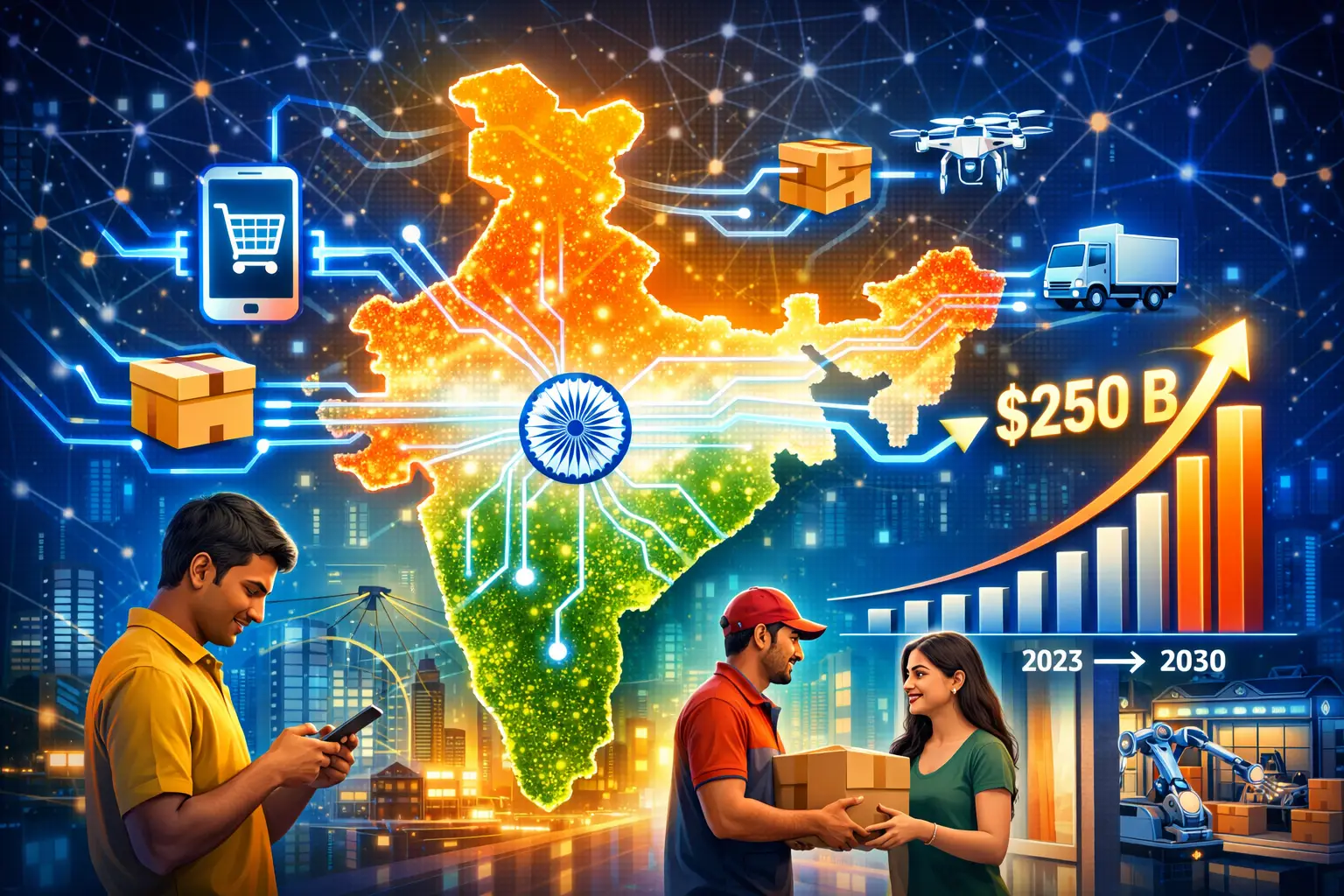
Artificial intelligence (AI) is reshaping how Indian consumers shop online and how merchants fulfill orders. A recent joint report by logistics platform Shiprocket and professional services firm Deloitte forecasts that India’s AI-driven e-commerce market will expand to $250 billion by 2030. This projection underscores AI’s potential to boost sales volumes, optimize supply chains and deliver personalized experiences at scale.
Key Highlights
- Current e-commerce market (2022): $84 billion in gross merchandise value (GMV).
- Projected GMV by 2030: $250 billion.
- AI-enabled solutions could contribute an additional $70–100 billion in GMV by 2030.
- Top five metropolitan areas account for roughly 53% of total e-commerce GMV.
- Major AI use cases: personalization engines, demand forecasting, dynamic pricing and smart logistics.
Main Story
The Shiprocket-Deloitte analysis highlights how AI-powered technologies are unlocking new revenue streams for online retailers and marketplaces. In 2022, India’s e-commerce sector recorded approximately $84 billion in GMV. By integrating machine learning, natural language processing and computer vision across customer touchpoints, businesses can clear transaction bottlenecks, reduce fulfillment costs and tailor recommendations to individual shoppers.
Demand forecasting tools, for instance, leverage historical sales data, seasonal trends and real-time inputs (such as social media sentiment) to predict product demand with up to 95% accuracy. This level of precision helps e-tailers maintain optimal inventory levels, cutting down on stockouts and overstock situations.
On the logistics front, AI-driven route optimization and warehouse automation are driving faster delivery times and lower per-shipment costs. By 2030, Shiprocket and Deloitte estimate that AI-led enhancements in last-mile delivery could account for roughly 10% of the total e-commerce GMV, or about $25 billion.
Background
India’s e-commerce journey began over two decades ago, but accelerated sharply in the past five years thanks to rising smartphone penetration, affordable data plans and digital payment innovations like UPI (Unified Payments Interface). As new players entered the market, intense competition forced platforms to invest in technology that delivers seamless user experiences.
Globally, AI has become a cornerstone of e-commerce optimization. From product search enhancements on Amazon to chat-based shopping assistants in China, AI applications are well-established in mature markets. In India, however, a combination of diverse regional preferences, multiple languages and fragmented logistics networks poses unique challenges—and opportunities—for AI adoption.
Why This Matters
- Economic growth: A $250 billion market by 2030 will create millions of jobs across technology, warehousing and delivery.
- SME empowerment: Small and medium-sized enterprises can tap into AI tools to compete with larger brands on personalization and fulfillment speed.
- Consumer benefits: Faster deliveries, relevant product recommendations and improved customer support will enhance shopper satisfaction.
- Technological leap: Investment in AI infrastructure will spur innovation in adjacent domains like fintech, supply chain analytics and robotics.
Official Statements or Expert Quotes
While the report itself does not include direct quotes, it underscores several key insights from Shiprocket and Deloitte experts:
- “AI-driven personalization is no longer optional—it’s critical for driving conversion rates and customer loyalty.”
- “Logistics optimization algorithms will unlock cost efficiencies that redefine competitive benchmarks for last-mile delivery.”
- “Data-driven demand forecasting can reduce overall inventory costs by up to 20%.”
Frequently Asked Questions
1. What factors are driving AI adoption in India’s e-commerce sector?
Key drivers include increased smartphone usage, affordable internet access, growth of digital payment solutions and competitive pressure to improve delivery times and customer engagement.
2. Which AI technologies are most commonly used in online retail?
Common applications include machine learning for demand forecasting, natural language processing for chatbots, computer vision for image-based search and recommendation engines for personalized offers.
3. How will AI impact small merchants on e-commerce platforms?
AI tools level the playing field by automating inventory management, optimizing pricing and enabling personalized marketing—benefits traditionally reserved for larger players with bigger budgets.
4. What challenges could slow down AI-led growth?
Barriers include data privacy concerns, lack of quality data, integration complexity with existing systems and skills shortages in AI and data science talent.
5. How can consumers expect the shopping experience to change?
Shoppers will see more accurate product suggestions, faster deliveries, proactive customer support via AI chatbots and dynamic pricing that responds to real-time demand signals.
Conclusion
India stands on the cusp of an AI-fueled e-commerce transformation. With the right mix of technology investments, regulatory support and talent development, the market is poised to grow from $84 billion in 2022 to $250 billion by 2030. For retailers, logistics providers and technology firms alike, embracing AI is not just a strategic advantage—it’s the key to unlocking the next wave of digital commerce in the world’s fastest-growing internet economy.