
Xi Jinping Launches Powerful China-Led Global AI Alliance in 2026
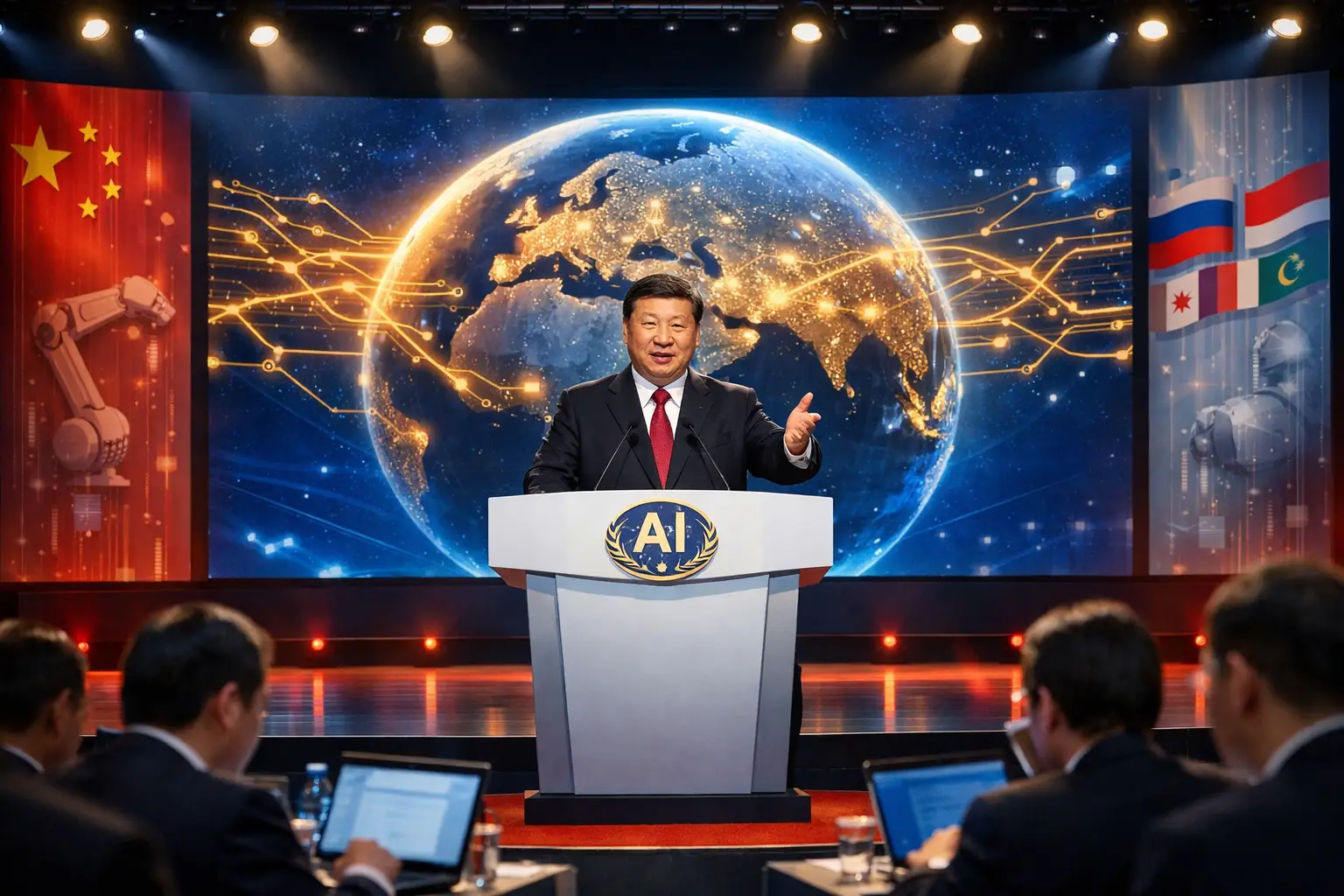
Xi Jinping Launches China-Led Global AI Alliance: A New Era in AI GovernanceIntroduction
On July 17, 2026, Chinese President Xi Jinping announced the formation of a China-led global AI alliance aimed at shaping international norms for artificial intelligence development. Officially named the Global Initiative on AI Governance, the alliance brings together 28 countries to address shared challenges around safety, ethics, and inclusivity in AI. This new forum arrives amid growing concerns over the societal impact of rapidly advancing AI systems and intensifying competition between major powers to set the rules for this transformative technology.
Key Highlights
- Launch date: July 17, 2026, by President Xi Jinping in Beijing.
- Name: Global Initiative on AI Governance.
- Founding members: 28 countries, including Pakistan, South Africa, Argentina, Russia, Thailand, and Ecuador.
- Core principles: responsibility, security, inclusiveness, openness, innovation, sustainability.
- Focus areas: AI safety standards, data governance, capacity-building, cross-border collaboration.
- Invitation: Open to all governments, industry stakeholders, academia, and civil society.
Main Story
President Xi Jinping unveiled the Global Initiative on AI Governance during a televised address in Beijing. He stressed the urgent need for unified guidelines to prevent misuse of AI technologies, from deepfake propaganda to autonomous weapons. While the United States and European Union pursue their own AI regulations, China’s alliance offers an alternative framework that emphasises state-led coordination and South–South cooperation.
The initiative outlines six guiding principles:
- Responsible Stewardship: Ensuring AI systems serve humanity and adhere to ethical norms.
- Security and Stability: Preventing AI-driven risks to public safety and digital infrastructure.
- Equity and Inclusiveness: Bridging the digital divide by enhancing access for developing countries.
- Transparency and Openness: Promoting open research, data sharing, and peer review.
- Innovation-Driven Development: Encouraging R&D to address societal needs.
- Environmental and Social Sustainability: Aligning AI progress with climate and social goals.
Founding members have agreed to regular high-level meetings, joint research projects, and capacity-building workshops. China’s Cyberspace Administration chairs the secretariat, coordinating technical working groups on AI safety testing, data protection, and ethical frameworks. Observers note that the alliance’s emphasis on inclusivity and technology transfer aligns with Beijing’s broader strategy to deepen ties with emerging economies.
Background
Interest in AI governance has surged as breakthroughs in machine learning and generative models outpace rule-making. In March 2026, the United States issued an executive order outlining AI safety standards and federal risk assessments. The European Union is finalising its AI Act, which introduces strict transparency requirements and risk classifications for AI applications. Meanwhile, G7 nations endorsed the Bletchley Declaration to advance trustworthy AI through shared standards.
Against this backdrop, China has invested heavily in AI research and infrastructure. In 2021, Beijing unveiled its New Generation Artificial Intelligence Development Plan, aiming to become the world leader in AI by 2030. Chinese companies—such as Baidu, Alibaba, and Tencent—are already global players in AI-driven services ranging from facial recognition to self-driving cars. The new global AI alliance builds on that momentum and seeks to shape the rules before Western frameworks become dominant.
Why This Matters
The launch of a China-led global AI alliance carries implications for governments, businesses, and civil society worldwide:
- Standard-setting: Early adopters of the alliance’s norms could gain a competitive edge in global AI markets.
- Geopolitical influence: China positions itself as a leader in tech governance, counterbalancing Western-led initiatives.
- Technology diffusion: Developing nations stand to benefit from technical assistance and capacity-building programmes.
- Ethical oversight: Multilateral collaboration may help mitigate biases, discrimination, and safety risks associated with AI.
For companies and research institutions, aligning with the alliance could open doors to partnerships, funding opportunities, and pilot projects in member countries. At the same time, businesses rooted in the U.S. or EU frameworks may find themselves navigating overlapping or conflicting regulations as different blocs roll out their own AI rules.
Official Statements or Expert Quotes
In his address, President Xi Jinping said the initiative “will help build a shared future where AI benefits all of humanity.” A spokesperson for China’s Cyberspace Administration highlighted that the alliance is open to “governments, international organisations, industry leaders, academia, and civil society groups.”
Frequently Asked Questions
- What is the primary goal of the Global Initiative on AI Governance?
To establish a common set of principles and collaborative mechanisms that ensure AI is developed and used responsibly, safely, and inclusively. - Which countries have joined the alliance?
There are 28 founding members, including China, Pakistan, South Africa, Argentina, Russia, Thailand, and Ecuador, among others. - How does this alliance differ from Western AI governance efforts?
Unlike the US executive order or the EU’s AI Act, the China-led alliance emphasizes state-led coordination, technology transfer, and inclusivity for developing countries. - Can private companies participate?
Yes. The initiative invites industry players, research institutions, and civil society organisations to join working groups and share best practices. - When will the alliance’s guidelines take effect?
The founding members plan to finalise detailed work programmes and publish technical standards by early 2027.
Conclusion
The launch of the China-led global AI alliance marks a significant step in the race to define international AI norms. By uniting diverse countries around shared principles, the initiative seeks to balance innovation with ethical safeguards and address the digital divide. As major powers pursue parallel regulatory paths, stakeholders worldwide will watch closely to see which framework gains traction and how overlapping rules shape the future of AI development.